Earthquake Resistant Building

Objective of the Project:
To explore how earthquakes impact building structures and to understand the importance of structural integrity in seismic zones by identifying key earthquake-resistant design features—such as cross-bracing, wide bases, base isolation, and tapered geometry—and recognizing the critical role engineers play in creating safe, resilient infrastructure.
Project Introduction:
QuakeSafe School is a student-engineered architectural model designed to demonstrate earthquake-resistant construction techniques. Centered around a scaled replica of their school building, the project integrates spring-based base isolation technology to simulate how seismic forces can be absorbed and redirected. By redesigning the foundation with flexible spring supports, students explore the principles of structural integrity and energy dissipation during earthquakes. This hands-on model highlights key engineering strategies used in real-world seismic zones and emphasizes the importance of safe, resilient infrastructure. QuakeSafe School offers a practical glimpse into how innovative design can protect communities from natural disasters.
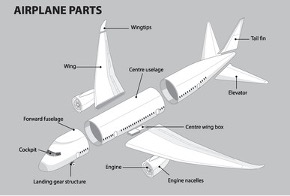
Aircraft Components
Objective of the Project:
The objective of this project is to explain and demonstrate the main components of an aircraft and their functions. By creating a model and visual display, the project aims to help viewers understand how different parts—such as the wings, fuselage, tail, and engine—work together to allow an aircraft to fly safely and efficiently.
Project Introduction:
Aircraft are complex machines designed to fly by balancing forces such as lift, weight, thrust, and drag. Every part of an aircraft plays an important role in making flight possible. In this project, we explore the key components of an aircraft, including the fuselage (body), wings, tail section, landing gear, and engine systems. Each component contributes to stability, control, and movement in the air.
By studying these parts, we gain a deeper understanding of basic aerodynamics and the engineering principles that make modern air travel safe and reliable. This project includes a model aircraft and explanatory charts to help students and visitors learn how aircraft are designed and how they function during flight.
ARDUINO – GAS DETECTION SAFETY SYSTEM

Smart Breaking System for Safety
Objective of the Project:
To build a low-cost gas detection system that identifies harmful gases in the environment and alerts users in real time, promoting safety awareness and demonstrating the practical use of Arduino with analog sensors.
Project Introduction
This project uses Arduino along with a gas sensor (like MQ-2 or MQ-5) to detect flammable or dangerous gases in the air. When gas levels rise above a safe threshold, the system activates a buzzer or LED warning indicator. The Arduino continuously reads sensor data and displays it on a serial monitor or LCD. This project simulates how real industrial and home safety systems work, making it an excellent learning tool for electronics, programming, and environmental safety.
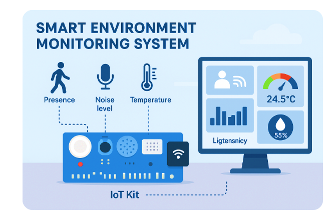
Smart Environment Monitoring System
Objective of the Project:
To demonstrate how IoT technology can continuously monitor and report real-world environmental conditions, using sensors to detect presence, noise levels, humidity, light intensity, and temperature. The project aims to highlight the importance of smart monitoring in homes, schools, and workplaces.
Project Description:
The Smart Environment Monitoring System uses an IoT Kit equipped with multiple sensors to track various environmental parameters. The system detects human presence, measures noise levels, checks humidity and temperature, and monitors light intensity, sending data to a dashboard or display. With the help of IoT networking, the system can provide alerts, store logs, and support automated responses such as turning lights on or off. This project demonstrates how IoT can make living spaces safer, energy-efficient, and more responsive to human activity.
MICRO:BIT ARCADE – MULTI-GAMES PROJECT

Objective of the Project:
To showcase the Micro:bit’s ability to run multiple interactive games within a single system, highlighting its versatility in programming, sensor integration, and user-controlled interfaces. The project aims to demonstrate creativity, logic, and coding skills by combining different games—using Make Code—into one compact arcade platform.
Project Introduction:
The Micro:bit Arcade project brings together a collection of mini-games developed using Microsoft MakeCode. Games such as magic 8 ball ,Stone–Paper–Scissor, Step Counter, Music Player/Guitar, Maze Game, LED Patterns, and Compass Navigation, basketball are combined into one multifunctional device. Each game uses different Micro:bit components—accelerometer, buttons, speaker, LEDs, and compass—to create interactive experiences. This project shows how a single microcontroller can support diverse game mechanics, making it an engaging and educational tool for students and STEM enthusiasts.
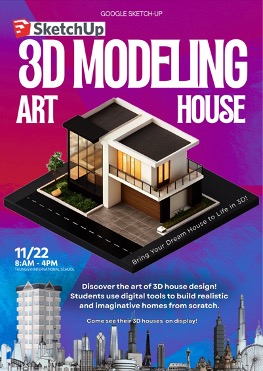
3D Modeling Art
Project Overview
The Graphic Design Team focuses on using digital art and design tools to create visual materials such as posters, logos, layouts, and digital illustrations.
Students will explore how to communicate ideas creatively through colors, typography, layout, and composition.
This project showcases how art meets technology, emphasizing the A (Art) in STEAM.
2. Objectives
- To learn and apply basic graphic design principles.
- To use design software (like Adobe Photoshop, Canva, or Illustrator).
- To create digital artworks, posters, and school-related materials.
- To develop creativity, visual communication, and digital skills.
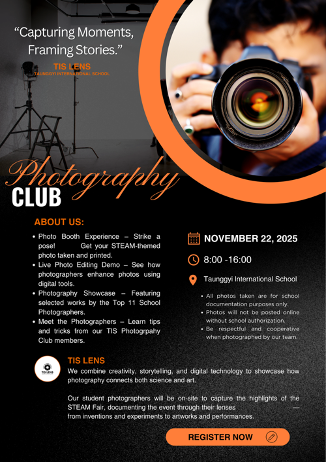
Photography Team – Capturing Moments Through the Lens
Project Overview
The Photography Team project aims to develop students’ skills in digital photography, composition, and visual storytelling.
* Students will learn to handle a camera, apply photography techniques, and present their best photos in a school showcase or STEAM Fair.
It highlights creativity, teamwork, and respect for ethical photography practices.
Objective of the Project:
· To understand the basic concepts and functions of photography (camera angles, lighting, composition).
· To apply creative and technical skills in taking and editing photos.
· To promote teamwork and professionalism among student photographers.
To showcase the school’s activities and talents through visual documentationHTML Team Project Plan: “From Ideas to Live Websites”
Project Overview:
The HTML Team aims to introduce students to the world of web design and development through hands-on activities and creative projects. This project empowers students to design, code, and publish their own websites using HTML, CSS, and basic JavaScript.
By learning these essential skills, students will understand how websites work and how technology can transform ideas into interactive digital experiences.
Objective of the Project:
· To understand the fundamentals of web development using HTML and CSS.
· To apply design principles in creating visually appealing web pages.
· To explore interactivity and functionality using JavaScript.
· To encourage creativity, collaboration, and critical thinking through digital creation.
· To showcase student-made websites during the STEAM Fair or school exhibitions.
RoboGenesis - Where AI Meets Physical Intelligence: Mitu Robot

Mitu Robot
Objective of the Project: The main objective of the MiTu Robot project is to help students explore the concepts of robotics, programming, and engineering design through a hands-on, interactive platform. The project aims to:
- Develop logical thinking, problem-solving, and creativity.
- Understand the basics of robot construction, movement, and control.
- Introduce coding concepts by programming the robot’s actions and responses.
- Encourage teamwork and collaborative problem-solving while building and programming.
- Demonstrate real-world applications of robotics in automation, AI, and everyday technology.
Project Introduction
The MiTu Robot is a smart, programmable robot developed by Xiaomi that combines STEM education and fun learning. Built from modular building blocks, it allows students to construct, customize, and control the robot in multiple forms—such as a humanoid, vehicle, or even creative designs.
Equipped with high-precision sensors, motor control, and Bluetooth connectivity, the MiTu Robot can be programmed through an intuitive mobile app using graphical coding (drag-and-drop blocks) or advanced programming modes. This makes it suitable for learners at different levels, from beginners experimenting with simple commands to advanced students exploring automation and AI-inspired movements.
uHand UNO Robot Hand

uHand UNO Robot Hand
Objective of the Project:
To introduce the uHand UNO, an open-source robotic hand designed for beginners, showcasing its adaptability and programmability. This project aims to demonstrate how users can explore robotics and automation using Arduino-compatible hardware, focusing on flexibility, control, and the potential for further sensor-based development.
Project Introduction:
The uHand UNO is a versatile and open-source robotic hand, specifically designed for beginners interested in robotics and electronics. Powered by an Atmega328 and compatible with Arduino, uHand UNO features a 6-channel knob controller for precise movement, Bluetooth connectivity, and 6 anti-blocking servos for smooth operation. It also includes several reserved interfaces for sensor expansions, allowing users to customize and upgrade the hand for more advanced projects. This project highlights how uHand UNO serves as an ideal platform for learning, experimentation, and secondary development in robotics and automation.
The Invisible Controller: Touchless Control: Controlling the Digital World with a Wave
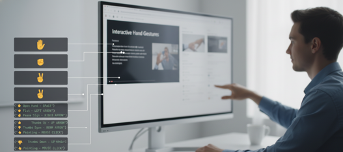
TonyPi AI Vision Humanoid Robot
Objective of the Project:
To create an intuitive, touchless human-computer interface that converts natural hand gestures into digital commands using artificial intelligence and computer vision, revolutionizing how we interact with technology.
Project Introduction:
Touchless Control is an innovative AI-powered system that enables users to control computers and applications through simple hand gestures. Using a standard webcam and advanced machine learning algorithms, it detects and interprets hand movements in real-time, allowing for seamless control of presentations, media, and games. This project demonstrates the future of natural user interfaces, where technology responds to human movement rather than requiring adaptation to complex hardware, making digital interaction more accessible and intuitive than ever before.
TurboPi AI Vision Robot Car

TurboPi AI Vision Robot Car
Objective of the Project:
To demonstrate the versatility of the TurboPi smart vision robot car, focusing on its AI-powered capabilities and advanced motion control using a Mecanum-wheel chassis. This project aims to showcase how robotics can be used in AI applications such as autonomous navigation, object detection, and machine learning, leveraging the power of Raspberry Pi and Python programming.
Project Introduction:
TurboPi is an innovative smart vision robot car that combines the power of Raspberry Pi with advanced robotics technology. Built on a Mecanum-wheel chassis for omnidirectional movement, TurboPi features high-performance pan-tilt servos and an HD camera, allowing for precise control and real-time vision processing. Additionally, its 4-channel line follower enhances its ability to navigate complex environments autonomously. Programmable in Python, TurboPi opens up a wide range of AI applications, including object detection, machine learning, and intelligent decision-making. This project provides a glimpse into the future of AI-driven robotics through the capabilities of TurboPi.
App Development – Unleash Your Inner Developer

Objective of the Project:
To demonstrate the revolutionary potential of natural language programming by using Dyad's open-source AI platform to create functional web applications through conversational prompts, eliminating traditional coding barriers.
Project Introduction:
App Development showcases the future of software creation through Dyad's innovative no-code AI platform, offering significant advantages for students by democratizing the development process.
This approach lowers technical barriers, allowing learners without programming experience to quickly transform ideas into functional applications while understanding core development concepts. Students gain valuable skills in rapid prototyping and iterative design thinking, fostering creativity and problem-solving abilities essential for future tech careers. The platform also builds crucial digital literacy by introducing cutting-edge AI tools, empowering young creators to explore tech pathways and develop confidence in their ability to build digital solutions. By typing simple English instructions, visitors can create custom task management and productivity tools during live demonstrations, making software creation accessible and inspiring the next generation of innovators.
Exploring Innovation with Micro:bit

Exploring Innovation with Micro:bit
Objective of the Project:
- To introduce students to coding and electronics using a simple microcontroller.
- To develop problem-solving, creativity, and logical thinking through hands-on projects.
- To learn how sensors, motors, and LEDs can be programmed to interact with the environment.
- To explore practical applications of technology in daily life, robotics, and STEM education.
- To inspire students to create innovative projects using simple electronics and programming.
Project Introduction
The Micro:bit is a small, programmable microcontroller designed for STEM education. It has built-in features such as LEDs, buttons, motion sensors, compass, and Bluetooth, which allow students to create interactive projects like games, robots, and automation systems.
3D Pen Creations: Bringing Ideas to Life!

3D Pen Creations: Bringing Ideas to Life!
Objective of the Project:
A 3D Pen is a handheld device that extrudes heated plastic filament, which cools and solidifies instantly to form three-dimensional objects. Unlike traditional drawing tools, a 3D pen allows users to draw in the air or on surfaces, creating sculptures, models, and prototypes.
In this project, students use the 3D pen to design and build creative objects, such as models, decorative items, or small functional prototypes. They learn about shapes, dimensions, and structural stability, while practicing precision and control.
The 3D Pen Project combines art, engineering, and technology, offering students a hands-on experience in turning ideas into physical creations. It also introduces them to modern techniques used in product design, prototyping, and STEM-related innovations.
The Era of Intelligence: Robotics, Machines, and the New Age of Innovation

The Era of Intelligence: Robotics, Machines, and the New Age of Innovation
Objective of the Project: Through this project, students will explore how different robots work by identifying their main parts and understanding how coding controls their actions. They will learn how robots move, sense, and perform tasks, while developing important skills such as problem-solving, creativity, and teamwork through hands-on learning activities.
Project Introduction: Intelligent machines and robots are smart tools created by humans to help carry out tasks automatically. Robots such as Alpha One, Iron Man, Mechanical Hands, and Transform Robots use motors to move, sensors to detect their surroundings, and a control board (like Arduino) to follow coded instructions. These parts work together to help robots move, sense, and respond to commands.
Pet Robot
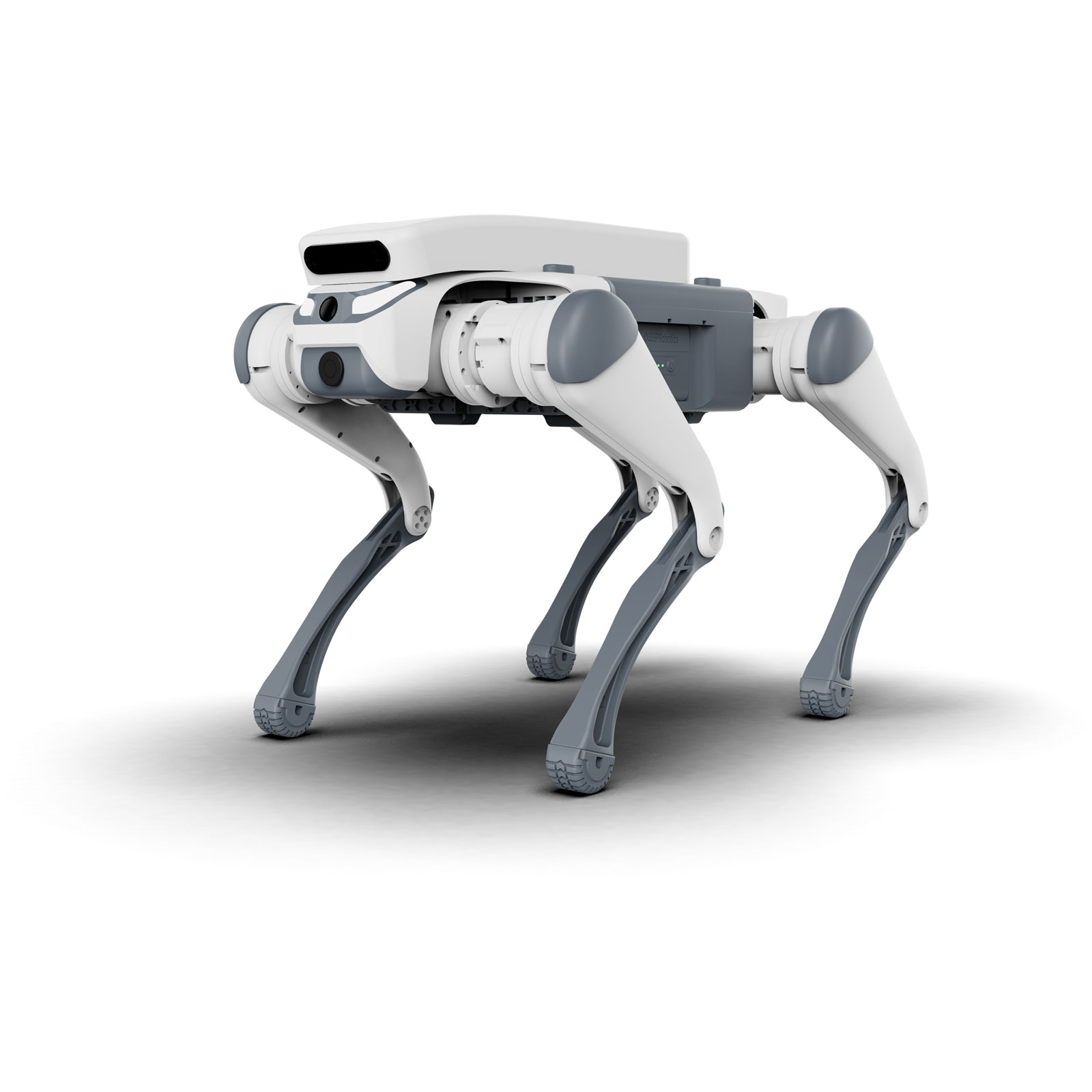
Pet Robot
Objective of the Project:
Through this project, students will identify the main parts of the Fire Bullet Pet Robot, including its motors, sensors, wheels, and firing mechanism. They will explore how commands control the robot’s movement and actions, and learn how robots work in real life. Students will also develop problem-solving, creativity, and teamwork skills while using and observing the robot in hands-on activities.
Project Introduction:
The Fire Bullet Pet Robot is a fun and interactive intelligent machine that can move, light up, and shoot soft water bullets when it receives commands. It uses motors to move, sensors to detect objects, and a control system (remote or app) to follow instructions. This robot helps students understand how real robots respond to buttons and signals to perform different actions.
Creative Drawing with MSW Logo:

Creative Drawing with MSW Logo:
Objective of the Project:
Through this project, students will learn how to use MSW Logo commands to draw shapes and patterns. They will explore direction, angles, and repetition (repeat commands) while improving their logical thinking and creativity. Students will also develop problem-solving skills as they test and correct their commands to create different designs.
Project Introduction
Project Introduction: MSW Logo is a simple drawing and coding program that uses a “turtle” to create shapes and patterns on the screen. By typing easy commands, students can tell the turtle where to move, turn, and draw. This helps them understand how computers follow instructions and how basic coding can be used to create colorful designs.
Six simple machines
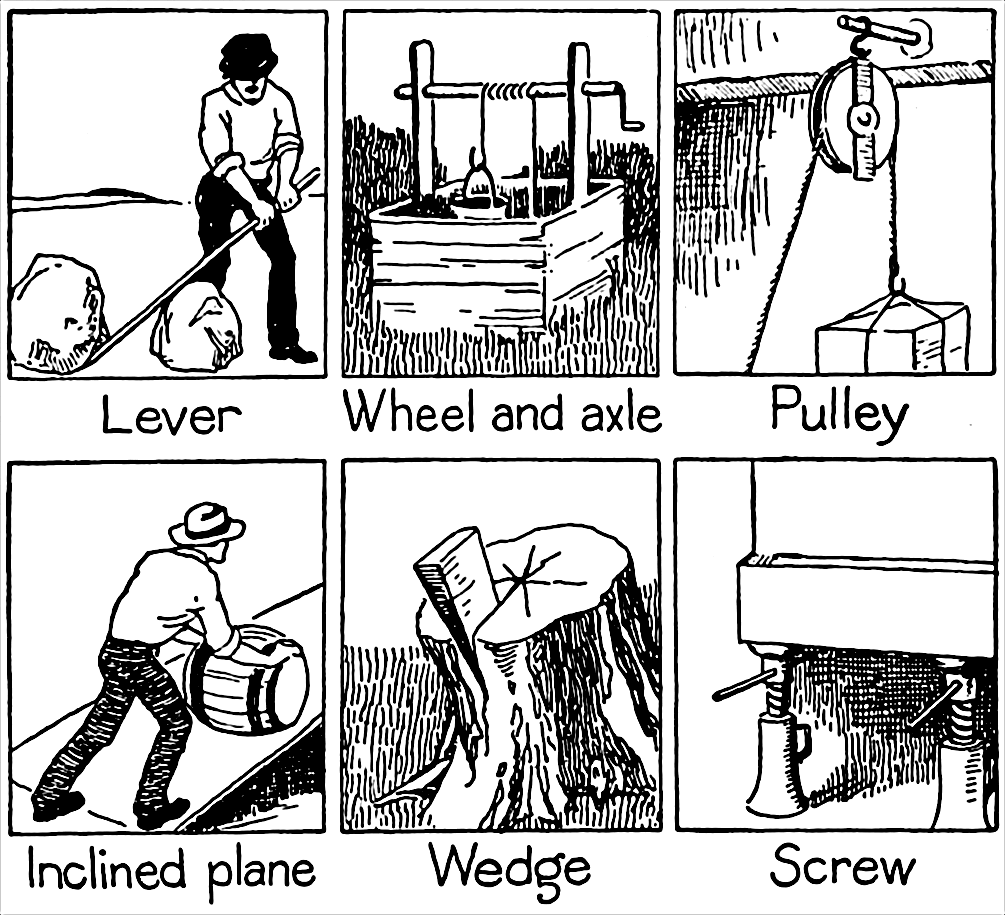
Six Simple Machines
Objective of the Project:
The objective of this project is to understand the six types of simple machines: lever, wheel and axle, pulley, inclined plane, wedge, and screw —and learn how they make work easier by changing the direction or magnitude of force. The project aims to explore the principles behind each simple machine and identify their real-life applications.
Project Description:
Simple machines are basic mechanical devices that have been used since ancient times to facilitate work by reducing the effort needed to move or lift objects. There are six classic simple machines: the lever, wheel and axle, pulley, inclined plane, wedge, and screw. This project will involve identifying and explaining each of the six simple machines, demonstrating how they work, and recognizing examples of their use in practical situations.
Smart Helpers Around us

Smart Helpers Around us
Objective of the Project:
The primary objective of this project is to identify and understand the various applications of computer technology in different places around us. Students will learn how computers and smart systems are used in homes, schools, hospitals, airports, supermarkets, and banks to improve efficiency, safety, and convenience. The project aims to develop awareness of the role of technology in enhancing quality of life and to encourage innovative thinking on how these smart solutions can be further improved and integrated into our daily routines.
Project Introduction:
In our daily lives, technology plays a crucial role in making routines easier, safer, and more efficient. Smart systems and computer-based devices are integrated into various places around us—homes, schools, hospitals, airports, supermarkets, and banks—enhancing the way we live, work, and interact. These intelligent technologies help provide better services, improve safety, streamline operations, and support individuals in many ways. This project explores how computers and smart systems are transforming everyday environments into smarter, more connected spaces that serve our needs effectively.
Super Smart Computer of the Future

Super Smart Computer of the Future
Objective of the Project:
The objective of this project is to explore the concept of quantum computing, understand how quantum computers operate using principles of quantum mechanics such as superposition and entanglement, and examine their potential advantages over classical computers. The project aims to highlight the future possibilities of quantum computing technology in solving complex problems faster and more efficiently.
Project Description:
Quantum computers represent the next generation of computing technology that leverages the unique properties of quantum mechanics to perform calculations in ways impossible for traditional computers. Unlike classical computers that use bits as information units, quantum computers use quantum bits or qubits, which can exist in multiple states simultaneously thanks to superposition. By understanding how quantum computers work and their potential applications, this project introduces the fascinating world of quantum computing and its role as the super smart computer of the future.
Under the Bridge, Over the Tunnel
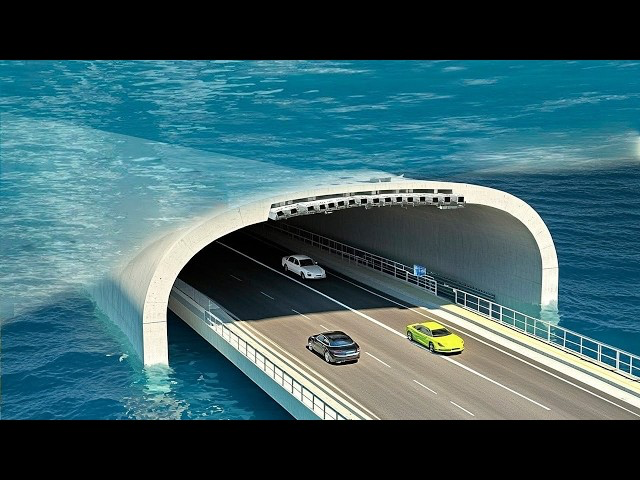
Under the Bridge, Over the Tunnel
Objective of the Project:
The objective of the project "Under the Bridge, Over the Tunnel" is to explore and understand the engineering principles behind bridge and tunnel construction. The project aims load distribution in bridges and tunnels, emphasizing practical applications in civil engineering.
Project Description:
Bridges and tunnels are critical infrastructures that enable transportation and connectivity across natural barriers such as rivers, valleys, and mountains. This project will investigate how these machines and principles are applied "under the bridge" in tunnel construction and "over the tunnel" in bridge design, providing insight into their importance in civil engineering. Through this study, students will gain a deeper appreciation of the mechanics involved in building and maintaining safe and efficient transportation routes.This summary aligns with established engineering concepts of simple machines in bridge and tunnel construction.
Brainworks-Total School is hosting its 22nd Annual Science, STEAM, ICT, and Math Fair, an engaging and educational event that showcases the enthusiasm and creativity of students in these diverse fields. This exciting platform brings together projects that highlight innovation across Science, Technology, Engineering, Arts, and Mathematics, as well as cutting-edge developments in AI and robotics.
The Science, STEAM, ICT, and Math Fair 2025 celebrates the wonders of scientific discovery, technological advancement, and creativity.
This year, a special focus will be placed on AI projects, showcasing the transformative role of artificial intelligence in fields such as robotics, machine learning, and data science. Students will demonstrate AI-driven innovations, from autonomous robots to AI-powered vision systems, offering a glimpse into the future of technology.
Through these projects, students will not only hone their scientific and critical thinking skills but also explore how AI can help solve 21st-century sustainability challenges. The fair fosters global collaboration and encourages students to take on the responsibilities of shaping a future driven by technology and innovation.